Wednesday, February 3, 2010

Names?

What's in a name? Why is the concept of New Love called "new love"?
The concept of New Love is exactly that, to re-define, or re-conceptualize, love, in that sense then, the new definition/conceptualization is a new idea of love, distinct from our former and what has already been asserted, erroneous ideas of love. That love is dead, and if we are ever to try to achieve anything within our conditions as human beings living on this Earth, we need a New Love. But I'd like to be wary with this word "New" as I don't presuppose that this New Love has not existed before, perhaps the mission of the New Love Movement is to re-discover that which has been lost, to re-capture the True Love which our world and existence is in terrible need of...

Sunday, January 17, 2010

The New Love Movement

I have been involved in this movement for sometime, along with close friends, at least for some years now. It involved replaced anger with sadness, hatred with love, and the ability to enter wholeheartedly the realm of Non-Judgment.
Over my, the author's, stay in Europe over the past 5 months, along with some visionary insights from the writer Friedrich Nietzsche, I have impulsively come up with a list of 10 principles for the New Love Movement.
I believe many can benefit from these Principles, but I admit they are Principles most assuredly from my mind, and therefore may be only applicable to me, my lived experience, and the associations with people I now have.
Here are the Principles:

New Love Movement
1. accept your weakness, only then can you become strong, and accept the weakness of others, so you can help them become strong

2. never judge

3. accept pain as a side effect of love and close relationship, if you only want to be made to feel good, you are only loving yourself, but if you can love another even if they cause you pain, you show that you love them for who they are

4. it is not natural to be isolated, isolation only exists in isolation, without friendship, our minds weaken, as does our heart and soul

5. deny the self's longing for self-love, learn balance and reciprocation, recognize we yearn for pleasure and for ourselves to be happy, but also recognize seeking these things is not our destiny.

6. respect yourself, then respect others, come to terms with yourself, then you can accept others

7. be rid of childish things, to crave attention is natural, recognize this impulse, and funnel it in a positive way. do not stoop to losing yourself to gain it or anything else, such as pleasure.

8. love asks nothing in return, so ask for nothing. but respect and honesty asks for something in return, and thats to be respected and given honesty.

9. be free, and allow others to be free, never try to possess another, never allow yourself to be possessed. but to give yourself to another, and for another to give their-self to you, is a different matter.

10. true love is for the Other to be free, and still to Love Them.

Tuesday, October 27, 2009

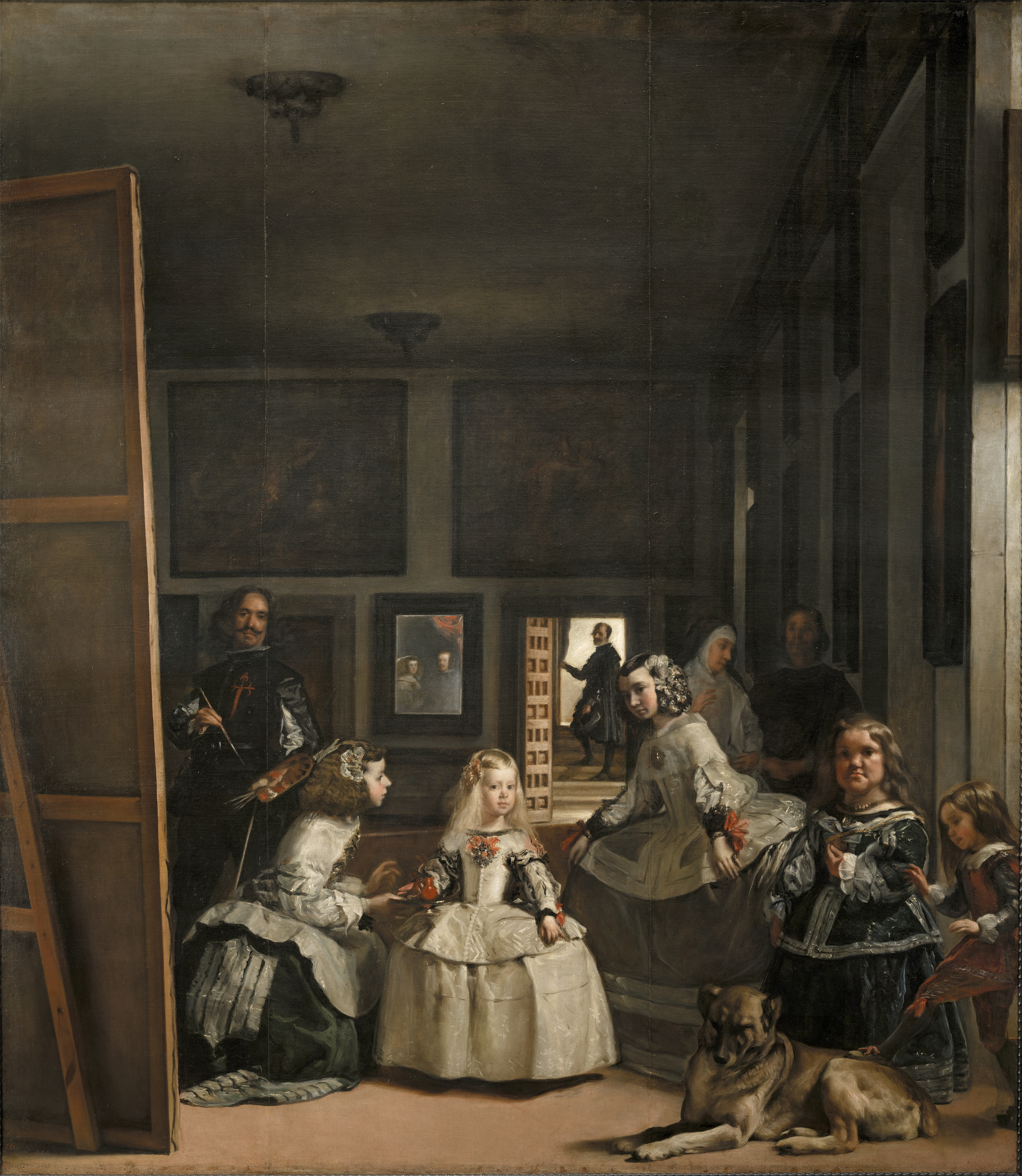
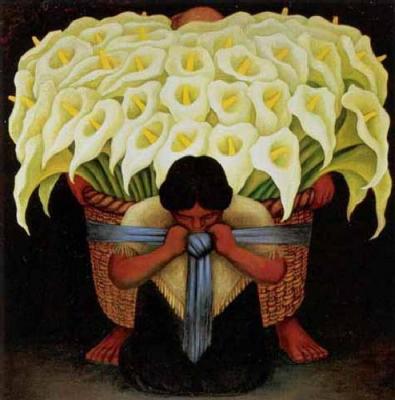
Featured Painting

The Garden of Earthly Delights (or The Millennium), is a triptych painted by the early Netherlandish master Hieronymus Bosch (c. 1450–1516), housed in the Museo del Prado in Madrid since 1939. Dating between 1503 and 1504, when Bosch was about 50 years old, it is his best-known and most ambitious work. The masterpiece reveals the artist at the height of his powers; in no other painting does he achieve such complexity of meaning or such vivid imagery. The triptych depicts several Biblical scenes on a grand scale and as a "true triptych", as defined by Hans Belting, was probably intended to illustrate the history of mankind according to medieval Christian doctrine.

Gabriel García Márquez

A Colombian novelist, short-story writer, screenwriter and journalist. García Márquez, affectionately known as "Gabo" throughout Latin America, is considered one of the most significant authors of the 20th century. In 1982, he was awarded the Nobel Prize in Literature. He pursued a self-directed education that resulted in his leaving law school for a career in journalism. From early on, he showed no inhibitions in his criticism of Colombian and foreign politics. In 1958, he married Mercedes Barcha; they have two sons, Rodrigo and Gonzalo.

He started as a journalist, and has written many acclaimed non-fiction works and short stories, but is best-known for his novels, such as One Hundred Years of Solitude (1967) and Love in the Time of Cholera (1985). His works have achieved significant critical acclaim and widespread commercial success, most notably for popularizing a literary style labeled as magical realism, which uses magical elements and events in otherwise ordinary and realistic situations. Some of his works are set in a fictional village called Macondo, and most of them express the theme of solitude.

Wednesday, August 12, 2009

Dokkōdō

The precepts

1. Accept everything just the way it is.
2. Do not seek pleasure for its own sake.
3. Do not, under any circumstances, depend on a partial feeling.
4. Think lightly of yourself and deeply of the world.
5. Be detached from desire your whole life long.
6. Do not regret what you have done.
7. Never be jealous.
8. Never let yourself be saddened by a separation.
9. Resentment and complaint are appropriate neither for oneself nor others.
10. Do not let yourself be guided by the feeling of lust or love.
11. In all things have no preferences.
12. Be indifferent to where you live.
13. Do not pursue the taste of good food.
14. Do not hold on to possessions you no longer need.
15. Do not act following customary beliefs.
16. Do not collect weapons or practice with weapons beyond what is useful.
17. Do not fear death.
18. Do not seek to possess either goods or fiefs for your old age.
19. Respect Buddha and the gods without counting on their help.
20. You may abandon your own body but you must preserve your honour.
21. Never stray from the Way.

Resentment

Resentment against others is always resentment against oneself.

Search

Look before asking. If you look, you are likely to find, but if you ask, you find nothing yourself.

Monday, August 3, 2009

BachxDalixYoYo Ma

Sunday, August 2, 2009

Featured Painting: Haydn


Joseph Haydn Playing String Quartets.

Chopin Ballade No 1 in G Minor